info@yechuang-ore.com
 +8615370227893






The main use of silicon manganese.
Silicon-manganese alloy is mainly used as an intermediate material for deoxidizer and alloy in steel production, and it is also the main raw material for the production of medium and low-carbon ferromanganese.Silicon-manganese alloy is an alloy composed of manganese, silicon, iron, a small amount of carbon and other elements. It is a kind of ferroalloy with a wide range of uses and a large output.Its consumption accounts for the second place of ferroalloy products in electric furnaces.The silicon and manganese in silicon-manganese alloys have a strong affinity with oxygen. Silicon-manganese alloys are used in steelmaking. The deoxygenation products MnSiO3 and MnSiO4 melt at 1270℃ and 1327℃, respectively. It has the advantages of low melting point, large particles, easy to float, and good deoxygenation effect.Under the same conditions, manganese or silicon are used for deoxygenation alone, and the burn rate is 46% and 37%, respectively, while silicon-manganese alloy is used for deoxygenation, and the burn rate of the two is 29%.Therefore, it has been widely used in steelmaking, and its output growth rate is higher than the average growth rate of ferroalloys, and it has become an indispensable compound deoxidizer and alloy additive in the iron and steel industry.
Silicon-manganese alloys with a carbon content of less than 1.9% are also semi-finished products used in the production of medium and low-carbon ferromanganese and electro-silicon thermal metal manganese.In ferroalloy production enterprises, silicon-manganese alloys used in steelmaking are usually called commercial silicon-manganese alloys, silicon-manganese alloys used in smelting low-carbon iron are called self-use silicon-manganese alloys, and silicon-manganese alloys used in smelting metals are called high-silicon silicon-manganese alloys.Manganese can be combined with silicon to form silicides MnSiO3, MnSiO and MnSiO3.As can be seen from the silicon-manganese state diagram, the most stable silicide is MnSi.Since the negative value of the free energy generated by the silicides of manganese is much greater than the negative value of the free energy produced by the carbides of manganese, the higher the silicon content in the silicon-manganese alloy, the lower the carbon content.
Keywords:
silicon manganese
You Can Also Learn More About Industry Trends
 The role of silicon-barium alloy in steel smelting.
Calcium silicate and barium are common additives in steel smelting. The silicon and barium can react with the oxygen in the steel to form oxide impurities such as silica, which are often used as deoxidizers.
 Properties of silicon carbide
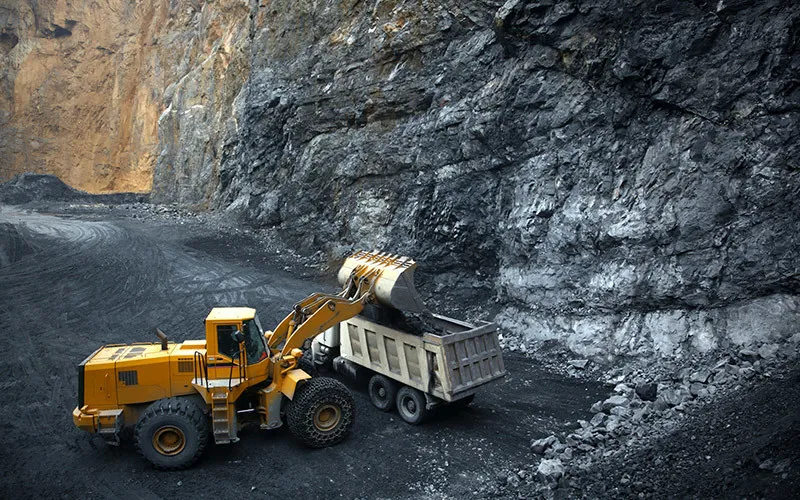
Silicon carbide: It is an inorganic substance with the chemical formula SiC. It is smelted at high temperature in a resistance furnace from raw materials such as quartz sand, petroleum coke (or coal coke), and sawdust (salt is required for the production of green silicon carbide).
The difference between heavy calcium carbonate and light calcium carbonate.
Heavy calcium carbonate is mainly a powder material obtained by mechanical grinding and processing of natural minerals such as calcite, marble, limestone, chalk, and white marble as raw materials;Light calcium carbonate is mainly a powder material obtained from limestone as raw material through processes such as calcination, digestion, carbonization, dehydration, drying, and classification.